


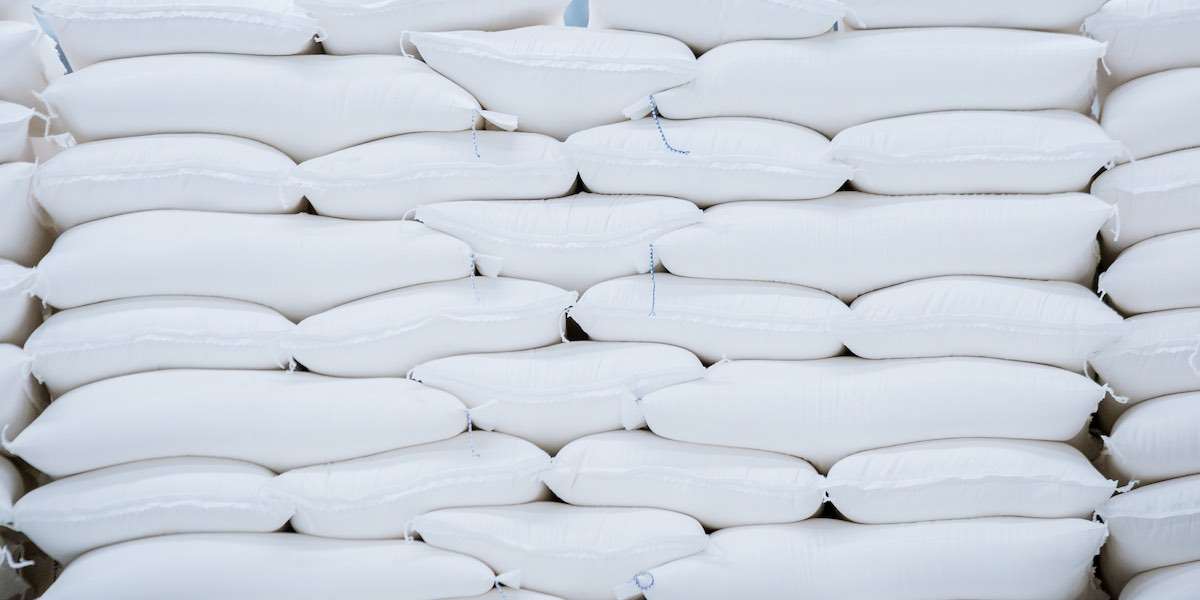
Sugar is an indispensable product in the food agro-industry and, at the same time, one of the most sensitive to humidity and contamination. Its nature makes it particularly vulnerable to environmental changes that affect its texture, flowability, and commercial quality. For this reason, the packaging that protects it plays a decisive role in its preservation. Among the most viable and efficient solutions for storing and transporting sugar are woven polypropylene sugar bags.
These polypropylene sugar bags are not only designed to withstand demanding logistical conditions, they are also engineered to ensure food safety, meeting national and international standards governing materials that come into direct contact with food products.
What Are Polypropylene Sugar Bags and Why Are They the Best Option for Agricultural Projects?
Polypropylene sugar bags are woven sacks made from polypropylene, a thermoplastic polymer recognized for its ideal balance of strength, durability, and lightness. Their woven structure allows them to withstand heavy loads, frequent handling, and intensive transportation without compromising product integrity.
The polypropylene used in these bags has properties that make it ideal for food applications, as it is chemically stable, resistant to tension, and suitable for contact with processed products. In addition, its lightweight composition contributes to more efficient logistics and helps reduce overall transportation costs.
Characteristics of Polypropylene Sugar Bags
The effectiveness of polypropylene sugar bags results from both the material and the technical design used to manufacture them. Their construction combines woven polypropylene threads that provide structural support with features tailored specifically to the needs of sugar.
Properties of Virgin Polypropylene as a Raw Material
Virgin polypropylene provides superior mechanical strength that allows sugar bags to maintain their shape even under heavy loads or repeated handling. Its chemical stability makes it a safe material that does not migrate substances into the food and retains its properties even in demanding environments.
Standard Capacities and Industrial Use
Polypropylene sugar bags are commonly manufactured in capacities of 25 to 50 kilograms, while larger operations rely on industrial formats such as big bags ranging from 500 to 1500 kilograms. The ability to adjust the grammage (GSM) allows each sack to be optimized according to logistical needs without compromising strength or functionality.
Moisture Control Is an Essential Requirement
Because sugar is extremely sensitive to humidity, sugar bags must include a laminated layer that reduces the moisture vapor transmission rate (MVTR). In even more demanding environments, such as maritime routes or storage facilities without climate control, internal liners are added to reinforce impermeability and prevent clumping.
Polypropylene Sugar Bags Provide Protection Against Moisture
Sugar is highly hygroscopic, meaning it absorbs moisture easily and loses its natural flowability. When this happens, it can harden and form lumps that reduce its functionality and commercial value. To prevent this, polypropylene sugar bags include a low-permeability lamination that acts as the first protective barrier.
In addition to this lamination, polypropylene sugar bags can contain internal layers that reinforce protection against ambient humidity. These materials are engineered to be chemically stable and prevent water vapor from entering during storage and transport. Thanks to these features, the packaging maintains product integrity, ensures efficient logistics, and significantly reduces the risk of deterioration.
Logistical Advantages of Polypropylene Sugar Bags
Beyond protecting sugar, these bags play an essential logistical role that directly impacts the efficiency of the supply chain. Their design minimizes risks during transport and handling, making them a strategic tool for ensuring safer and more streamlined operations.
Superior Mechanical Strength
Polypropylene sugar bags are engineered to withstand drops, vibrations, repeated transport, and intensive handling without tearing. This durability significantly reduces product losses and prevents costs associated with rebagging.
Greater Stability in Storage
Anti-skid finishes prevent slipping between bags, reducing risks during stacking and improving warehouse safety. This feature also helps maintain stable, higher stacks without compromising structural integrity.
Operational Cost Efficiency
Polypropylene enables an efficient manufacturing process, lowers cost per unit, and offers the added benefit of being a recyclable material, supporting more sustainable industrial practices. As a result, polypropylene sugar bags help optimize resource use and improve overall logistical profitability.
Polyproducto’s Polypropylene Sugar Bags Are a Strategic Allied for Agro-Industrial Operations
Polypropylene sugar bags are an essential element throughout the agro-industrial chain. Their strength, food safety, ability to protect sugar from moisture, and contribution to logistical efficiency make them a reliable, high-performance standard. For the agro-industry, their use represents not only safety and quality but also competitiveness and access to global markets where packaging is a decisive factor.
Polyproductos de Guatemala offers polypropylene sugar bags designed specifically to meet the demands of the industry, integrating mechanical strength, moisture-barrier technologies, and customizable options tailored to customer requirements. Their packaging is manufactured under strict quality standards, ensuring reliable performance in every stage of storage and transportation.