


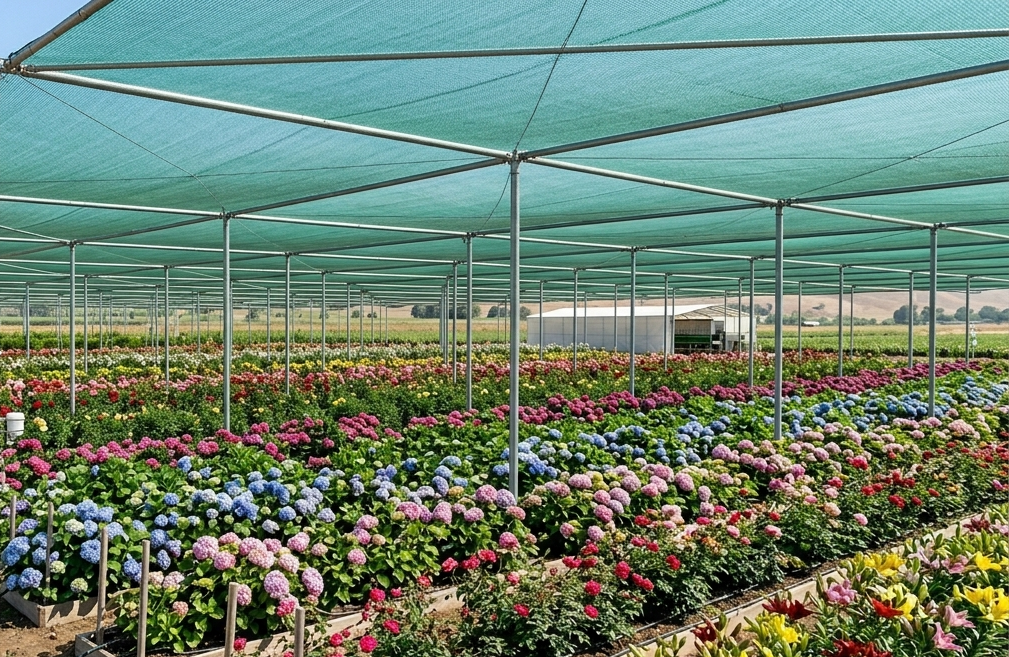
Flower production and cultivation in Guatemala can be a highly profitable venture when you maintain consistent quality at every stage of the growing process. However, factors such as intense sunlight, temperature fluctuations, excessive humidity, or pest infestations can directly affect the color, shape, and durability of your flowers.
If you’re looking to grow more uniform, healthy flowers with higher commercial value, it’s important to implement practices that allow you to better control the production environment. Beyond fertilization and irrigation, modern floriculture relies on solutions that help protect crops and create more stable conditions throughout the entire production cycle.
Below is a guide to achieving high-quality flower production.
Why does the flower industry in Guatemala require greater control over the growing environment?
Strict control of the growing environment is important because the quality of the flowers depends directly on the conditions in which they develop. If you want to produce flowers with intense colors, strong stems, and a uniform appearance, you need to minimize the factors that cause stress to the plant.
Floriculture in Guatemala has become an increasingly specialized activity due to the demands of nurseries, distributors, and export markets. A flower that has spots, sunburn, deformities, or pest damage loses commercial value, even if the plant developed correctly in other respects.
For this reason, many growers have begun implementing protection systems that allow them to create a more controlled environment around the crop, with the goal of reducing dependence on weather conditions and achieving more consistent results throughout the year.
What factors affect the quality of flower crops?
The main factors that can affect your flower crops are:
- Excessive solar radiation
- High temperatures
- Strong winds
- Nutritional deficiencies
- Water stress
- Presence of insects and diseases
Once you have these factors under control, your chances of producing high-quality results increase significantly.
How should I prepare the soil to grow stronger, healthier flowers?
You should work with fertile soil that has good structure and adequate nutrient availability to promote the development of strong roots and more vigorous plants.
The success of any crop begins beneath the surface. When roots encounter balanced soil rich in organic matter, the plant develops a greater ability to absorb water and nutrients, which translates into greater resistance to adverse conditions.
Investing in soil quality also helps reduce problems related to compaction, poor drainage, and extreme fluctuations in moisture.
What qualities should good soil for my flowers have?
To help your flowers thrive, make sure your soil has:
- Good drainage
- High organic matter content
- Adequate aeration
- Low compaction
- A slightly acidic or neutral pH
Why is it important to maintain a balanced pH?
Because pH determines the availability of nutrients to the plant. When it falls outside the proper range, essential elements such as nitrogen, phosphorus, calcium, or magnesium may become unavailable, affecting growth and flowering.
How should I water my flowers to prevent disease and water waste?
You should apply only the amount of water the plants need and avoid excess moisture, which promotes the development of diseases.
One of the most common mistakes in flower production is assuming that more water equals better results. In reality, excess moisture can create the ideal conditions for the development of fungi, rot, and other problems.
In addition to affecting plant health, improper irrigation management increases production costs and wastes resources that could be used more efficiently.
What is the best time to water my flowers?
Generally, the early morning or, alternatively, late afternoon (only if the weather is very humid or hot) are the best times to water your plants.
During these times:
- Evaporation is reduced
- Plants make better use of water
- Heat stress is reduced
- Water waste is reduced
Which irrigation systems are most efficient for flower crops?
Drip and micro-sprinkler systems generally provide the best results because they allow for uniform and controlled water distribution.
In addition, they facilitate better water management and help maintain adequate soil moisture levels.
Why does growing flowers in the shade improve flower quality?
Because controlled shading protects plants from excessive solar radiation and helps maintain conditions that are more favorable for their growth.
Shade-grown flower production is a widely used practice in modern floriculture due to the benefits it offers in terms of growth, aesthetic quality, and crop uniformity.
In many regions of Guatemala, especially during the dry season, the intensity of solar radiation can cause visible damage to leaves, petals, and stems. This damage reduces the commercial value of the crop and results in economic losses for the grower.
What is shade cloth, and how does it work for ornamental plants?
Shade cover for plants is a mesh designed to partially reduce the amount of sunlight reaching the crop without hindering natural air circulation.
Its main function is to create a more stable microclimate that allows plants to thrive under better conditions.
How does a shade net for flowers work?
A shade net for flowers filters a portion of the sunlight and reduces the direct impact of the sun’s rays on the plant.
Depending on the shading percentage, it can block between 30% and 90% of sunlight, allowing you to tailor the protection to the specific needs of each species.
Why is sun protection so important in floriculture?
Sun protection is important because it helps reduce heat stress, prevent sunburn, and preserve the appearance of flowers.
When a plant receives more radiation than it can tolerate, it begins to divert energy toward defending itself against the heat rather than using it to grow and produce high-quality flowers.
How does plastic sheeting for ornamental nurseries help improve production?
Plastic sheeting for ornamental nurseries helps maintain more stable temperature and light conditions, promoting more uniform growth.
Additionally, it reduces dehydration of leaves and petals, helping to preserve a healthier appearance throughout the entire production cycle.
How can I improve pest control in my flower crops without relying solely on pesticides?
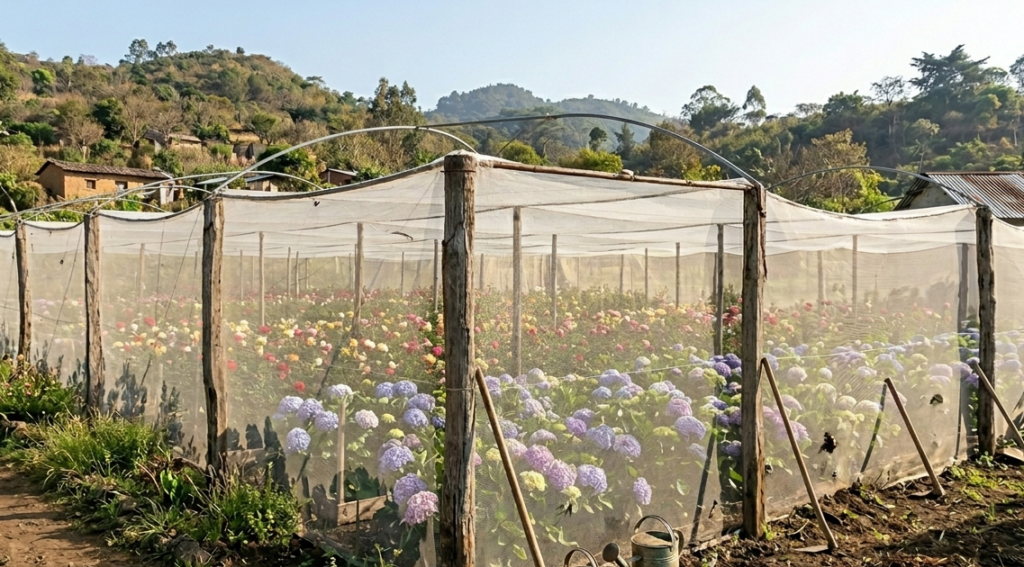
You can implement physical barriers to prevent pests from entering before they affect production.
Insect control in flower crops is essential for protecting both the visual quality and the overall health of the plants. Insects such as thrips, aphids, and whiteflies not only damage the flowers directly but can also transmit diseases that affect crop yield.
For this reason, more and more growers are supplementing their pest management programs with physical exclusion systems, such as the use of anti-virus netting or insect netting.
How does an antivirus firewall work?
An anti virus mesh acts as a high-density physical barrier designed to prevent small insects from entering.
By limiting pests’ access to the production area, it significantly reduces the risk of infestations and the spread of disease.
What advantages does it offer over chemical control?
Its main benefits include:
- Ongoing preventive protection
- Reduced reliance on pesticides
- Fewer chemical applications
- Lower risk of virus transmission
- Greater protection for crops
How can I protect my flowers from wind and sudden changes in weather?
You should create barriers that reduce wind speed and help maintain more stable environmental conditions around the crop.
Strong gusts can cause physical damage to stems, deform flowers, or accelerate moisture loss in plants. Similarly, sudden changes in temperature cause stress that affects growth and flowering.
Modern agricultural netting offers an efficient solution because it combines sun protection, environmental control, and wind reduction.
What are the benefits of growing flowers in a protected environment?
When you maintain a more stable environment, you can achieve:
- More uniform flowers.
- Less mechanical damage
- Higher aesthetic quality
- Less environmental stress
- More consistent production throughout the year
As a result, you increase the market value of your crop and reduce losses caused by weather conditions.
What are the differences between open-field cultivation and using specialized netting?
Specialized netting provides greater control over growing conditions and helps reduce risks associated with weather and pests.
| What Affects Your Crop | Traditional Protection (Open Field) | Specialized Nets (Saran and Antivirus) |
| Sun and Temperature | Uncontrolled. The sun burns petals and leaves during the hottest hours. | Filtered. The netting regulates how much radiation reaches the plant (between 30% and 90% shade). |
| Pests and insects | They enter freely. You have to spray frequently to control them. | The insect-proof netting physically blocks their entry. You spray much less. |
| Wind | Gusts hit directly: twisted stems, broken petals, dehydrated plants | The netting reduces the force of the wind before it reaches the plants. |
| Flower quality | Variable. Depends heavily on the weather each season. | More consistent. Brighter colors and flowers that last longer after harvest. |
| Costs and investment | Low at the start, but losses due to damage and pests are frequent. | Requires an initial investment, but losses decrease and quality improves. |
One step at a time: how to improve your flower cultivation
Improving the quality of your flowers doesn’t mean transforming your entire production overnight. In most cases, the best results come from first identifying the factor that’s limiting your crop’s performance. If you notice scorched leaves or petals, you’ll likely need to increase sun protection. If pests are a recurring problem, it may be time to install physical barriers to keep them out of the production area. If wind affects plant uniformity, creating a sheltered environment can make a significant difference.
If you’re just starting out in flower production, proper soil preparation and installing a cover suitable for your local conditions can help you build a solid foundation from the start. As your production grows, you can enhance your management with more efficient irrigation systems and insect protection solutions to maintain the quality of your flowers throughout the entire production cycle.
Remember that every crop, every region, and every grower faces different challenges. That’s why choosing the right solution requires considering the actual conditions of your land and your production goals. If you’d like to learn more about solutions to protect and optimize your crops, visit Polyproductos Guatemala and discover the options available for the agricultural sector.
Frequently Asked Questions About Flower Farming in Guatemala
Why is it better to use shade cloth than to leave flowers in direct sunlight?
Because direct sunlight can cause heat stress, sunburn, and a loss of aesthetic quality. Shade cloth helps regulate sun exposure without affecting natural ventilation.
Does insect netting replace the use of pesticides?
Not entirely. Its main function is to prevent pests from entering, which can significantly reduce the need for chemical treatments.
What maintenance does shade netting require?
It requires periodic inspections and occasional cleaning to ensure it maintains its level of protection and ventilation.
How do I know if my crop needs more shade?
If you notice wilting during the hottest hours of the day, burns on leaves or petals, loss of color, or slow growth, your crop likely needs more sun protection.