


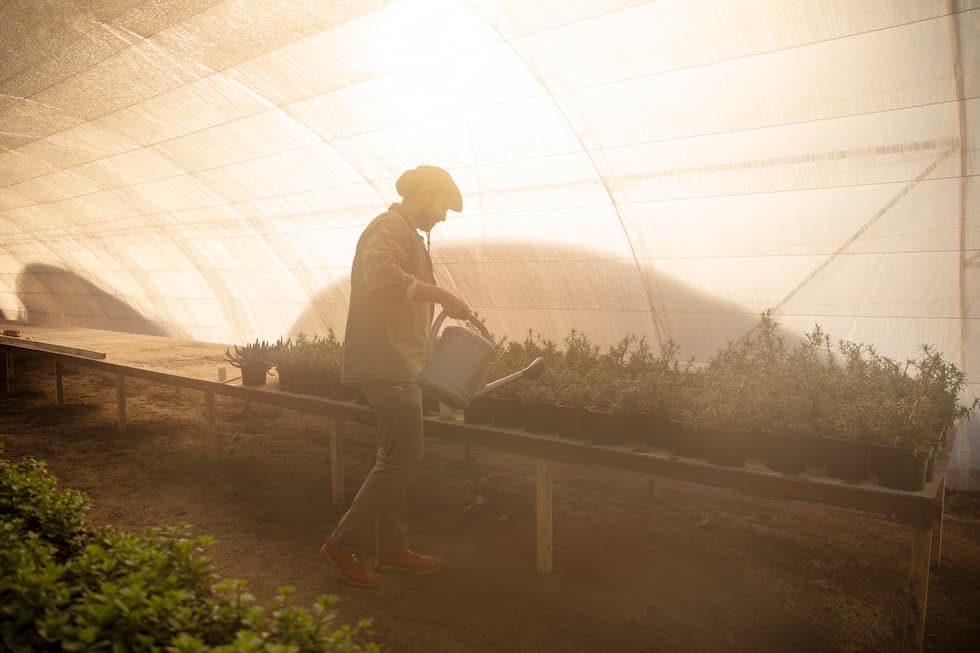
The heat wave brings with it two critical challenges for the agricultural industry: water stress and heat stress. In July and August, temperatures rise, rainfall decreases, and crops face conditions that can drastically reduce their yield. In this scenario, shade netting emerges as a technical solution to protect plants, reduce heat stress, and improve water use efficiency.
What Is Water Stress and How Does It Affect Crops?
Water stress occurs when water availability is insufficient to meet a crop’s needs. During the heat wave, reduced rainfall and increased evapotranspiration create an imbalance that affects growth, flowering, and fruit filling.
Symptoms include wilting, flower drop, small or misshapen fruits, and, in severe cases, plant loss. Additionally, water stress weakens the plant and makes it more susceptible to pests and diseases.
Heat Stress: A Silent Risk
Heat stress occurs when temperatures exceed a crop’s tolerance threshold. Direct radiation, combined with low humidity and wind, can cause leaf and fruit scorch, flower abortion, and reduced photosynthesis.
In vegetables, fruit trees, and ornamentals, heat damage can become visible within a few days and affect the product’s market quality.
How Shade Netting Mitigates These Effects
Shade netting is a woven structure designed to reduce direct solar radiation and moderate the temperature within the protected area. Its use allows for:
- Lower the temperature: by up to several degrees beneath the shade cloth, depending on the percentage of shade.
- Reduce evapotranspiration: less water loss from the soil and the plant.
- Protect against intense radiation: prevents sunburn and heat stress.
- Improve crop uniformity: more stable conditions promote uniform growth.
Operational and Economic Benefits
For growers and agribusinesses, shade netting offers tangible advantages:
- Reduced need for irrigation due to lower water loss
- Improved fruit and leaf quality by preventing sun damage
- Higher survival rates for seedlings and transplants during critical seasons
- Extended production window in areas with intense heat waves
Applications in the Region
In Guatemala and Central America, shade netting is used for:
- Short-cycle vegetables (tomatoes, chili peppers, cucumbers, lettuce)
- Fruit trees in establishment or production
- Ornamental plants and nurseries
- Crops sensitive to radiation and extreme heat
Its use is particularly important in areas with severe heat waves, such as the dry corridor, areas of intensive production, and regions with high solar radiation.
Why It’s Key in July and August
These months mark the peak of heat and water stress across much of the region. Shade netting helps get through this period with less risk, protecting your investment and ensuring continuity in production.
For companies looking to optimize resources and reduce losses, shade netting is a technical solution with a clear return on investment during the heat wave season.
Water stress and heat stress are real threats during the heat wave. Shade netting offers a practical and effective solution to protect crops, reduce losses, and improve the efficiency of the production system during the most critical period of the year.