


September in the Northern Triangle: The Month That Determines Your Late-Season Harvest
If you’re a farmer in Guatemala, El Salvador, or Honduras, you know that September isn’t just any month. It’s the peak of the rainy season, when tropical storms unleash their fury on the Northern Triangle. For farmers on the southern coast, in the highlands, and in the lowlands, this period means the difference between a successful harvest and the total loss of their investment.
Late-season crops—especially tomatoes, bell peppers, and sweet peppers—are the most vulnerable. Their stems, laden with fruit and weakened by constant moisture, become easy prey to wind gusts exceeding 40–60 km/h during storms. The result: broken plants, fruit in contact with damp soil, rot caused by fungi such as Phytophthora and Fusarium, and losses that can reach 40–60% of production.
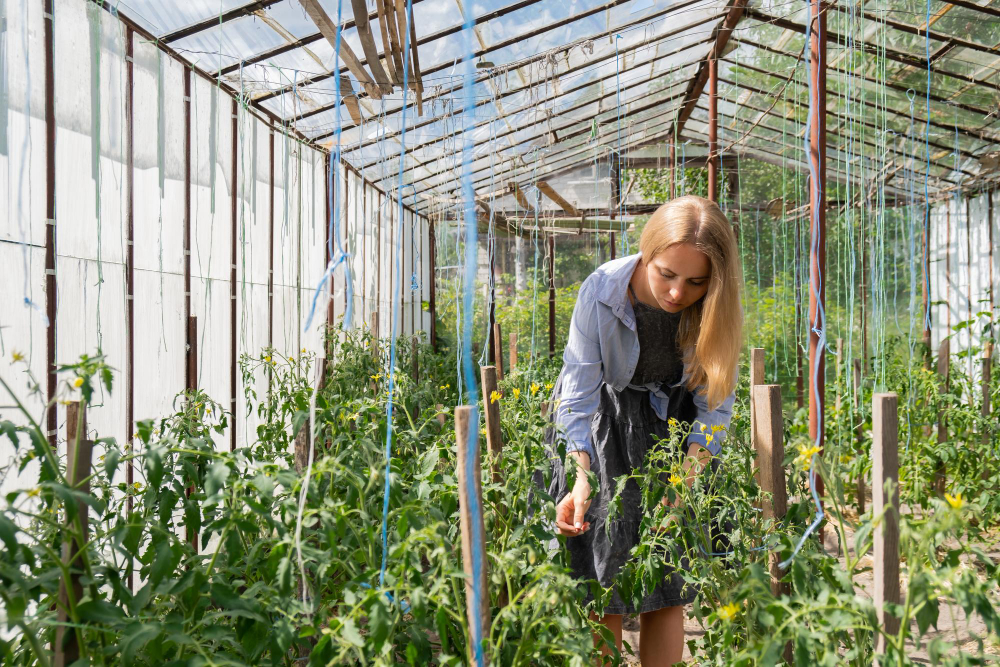
There is a proven and cost-effective solution: proper staking using high-strength polypropylene agricultural twine. This technique distributes the plant’s weight, keeps the fruit off the ground, and protects the stems from the wind. Below, we’ll show you how to set up a staking system that will save your late-season harvest in September.
Why September Is the Most Critical Month for Crops
September marks the peak of rainfall in Guatemala and the Central American region. The rains keep the soil saturated with moisture, while gusts of wind test the plants’ resilience. An unsupported tomato crop can lose up to 60% of its yield during September. With proper support, that loss is reduced to 10–15%. The difference is 45–50 percentage points, which can amount to thousands of quetzales per hectare.
Specific risks for tomatoes, bell peppers, and sweet chili peppers include wind-broken stems, fruit rot from contact with damp soil, leaf diseases caused by relative humidity exceeding 85%, plants toppling over due to soft soil, and premature fruit drop caused by combined stress.
The Solution: Staking with Polypropylene Agricultural Twine
Staking, also known as trellising or a support system, is an agricultural technique that involves supporting plants vertically using a system of guides, stakes, or netting, secured with a strong tying material. Its main purpose is to distribute the weight of the plant and its fruit along the main stem, keep the fruit elevated off damp soil to prevent rot, protect against wind by preventing plants from breaking or toppling over, and improve air circulation to reduce leaf moisture and disease.
Not just any rope is suitable for trellising. High-strength agricultural polypropylene twine offers technical advantages that make it superior to traditional alternatives such as henequen, cotton, or generic nylon ropes.
| Characteristics | Agricultural Polypropylene Twine (Polyproductos) | Henequen/Natural Blend |
| Tensile Strength | 80–120 kg breaking strength | 30–50 kg (weakens when wet) |
| Moisture Resistance | Does not absorb water, does not rot | Absorbs 20–30% moisture, rots in 2–3 weeks |
| UV Resistance | Stabilized (6–8 months shelf life) | Degrades in 1–2 months in sunlight |
| Elasticity | 3–5% elongation (does not loosen in the wind) | 15–20% (loosens constantly) |
| Field lifespan | 6–8 months (full cycle) | 2–3 weeks (requires replacement) |
| Cost per linear meter | $0.02–0.03 USD | $0.04–0.06 USD |
Polyproductos’ agricultural polypropylene twine offers high tensile strength, with a breaking strength of up to 120 kg—enough for indeterminate tomato plants 2–3 meters tall and heavy with fruit. It does not absorb moisture because polypropylene is hydrophobic; it does not rot or develop mold, even during the constant rains of September. It is UV-stabilized with special additives that protect against solar degradation, maintaining its strength for 6–8 months. Its controlled elasticity of 3–5% allows for natural movement of the plant without becoming excessively loose in the wind. It has a smooth surface that does not damage stems or leaves during tying, reduces entry points for diseases, is 100% recyclable, and is locally manufactured in Guatemala, where Polyproductos understands the climatic needs of the Northern Triangle.
Tying and Staking Techniques for Tomatoes, Bell Peppers, and Sweet Peppers
For the strong winds and heavy rains typical of September, we recommend the vertical system with stakes and spiral tying for indeterminate tomatoes, or the “V”-shaped trellis system for bell peppers and sweet peppers. Both systems distribute weight evenly and better withstand side winds.
System 1: Vertical Stake + Spiral Tying (Indeterminate Tomato)
You’ll need one bamboo or treated wood stake per plant, 2–2.5 meters tall and 3–4 cm in diameter; 1.5–2 meters of 2–3 mm thick agricultural polypropylene twine per plant; and nails or wire to secure the stake to the ground if necessary.
Stakes should be installed 15–20 days after transplanting. Place the stake 10–15 cm from the main stem, on the side opposite the prevailing wind direction. Drive the stake 30–40 cm into the ground for stability and secure it with a nail or wire if the soil is very soft due to rain.
System 2: “V”-Shaped Trellis/Support (Bell Peppers and Sweet Chili Peppers)
You will need two 2.5-meter-tall wooden or metal posts buried 50 cm deep per 10-meter-long row, steel cable or thick twine to tension between posts, 15–20 meters of polypropylene agricultural twine per row for individual ties, and, optionally, polypropylene netting with 15×15 cm openings.
The posts should be installed 10–15 days after transplanting. Place the posts at the ends of the row, buried 50 cm deep for stability. Connect the posts with steel cable or thick twine at the top, 2 meters high, and tension the cable to prevent sagging in the wind.
The Right Tension: Key to Distributing Weight Without Causing Damage
The tension of the twine determines whether the support system protects or damages the plant. Too much tension causes the stem to be strangled, blocks sap flow, and leads to yellowing and the death of upper branches. Tension that is too loose provides insufficient support; the plant sways excessively in the wind, and the stems break due to fatigue. The correct tension, with 3–5% slack, offers optimal support with evenly distributed weight, protecting the plant without causing damage.
To achieve the perfect tension with polypropylene twine, use the finger test: after tying, you should be able to slide a finger between the twine and the stem with slight resistance. If your finger doesn’t fit, it’s too tight. If it slides in easily and there’s room for two fingers, it’s too loose.
When the tension is correct, the trellising system acts as an external skeleton that transfers the weight of the fruit from the lateral branches to the main stem and then to the stake or wire, reduces the mechanical load on the secondary stems, preventing wind-induced breakage, keeps the plant upright by preventing it from leaning toward the damp ground, and allows for controlled movement that strengthens the stems without exposing them to excessive stress. The result is plants that can withstand winds of 50–60 km/h without breaking, fruit that never touches damp soil, and a 40–50% reduction in fungal diseases.
and how to avoid them
The most common mistake is using unsuitable materials such as henequen, cotton rope, or old twine. These materials absorb moisture, rot within 2–3 weeks, and lose their strength just when it’s needed most in September. The solution is to use high-strength polypropylene agricultural twine, such as that made by Polyproductos, which does not absorb water and maintains its strength for 6–8 months.
Another common mistake is tying the stakes too tightly, which strangles the stem, blocking sap flow, causing leaves to turn yellow, and killing the upper branches. Leave 2–3 cm of slack or use the finger test. Check weekly and adjust as the plant grows.
Waiting too long to install the support system is another problem. Plants that are 1 meter or taller are difficult to straighten without damaging roots or stems. Install stakes and apply the first tie 20–25 days after transplanting, when the plants are 30–40 cm tall.
Failing to prune the lower leaves that touch the ground allows leaves in contact with moist soil to serve as entry points for fungi such as Phytophthora and Fusarium. Prune leaves up to 30–40 cm from the ground after each tying and keep the lower area clean and well-ventilated.
Tying the vines above the fruit clusters rather than below them puts direct pressure on the fruit, causing deformation, premature drop, or fungal infection through the stem. Always tie the vines below the fruit clusters, never above them. The weight should be distributed along the stem, not on the fruit.
Polyproductos de Guatemala: Your Partner in Agricultural Twine
Polyproductos de Guatemala has established itself as the leading manufacturer of polypropylene agricultural twine in Central America, offering products specifically designed for the region’s extreme weather conditions.
100% local manufacturing in Guatemala allows for a deep understanding of the Northern Triangle’s climate, with products tested under real-world conditions. The certified high-strength polypropylene includes UV additives and stabilizers that guarantee a 6–8-month service life in the field. The tensile strength of 80–120 kg withstands winds of up to 70 km/h without breaking, making it ideal for September. The material does not absorb moisture; it is hydrophobic and does not rot or develop mold, even during constant rain. The controlled elasticity of 3–5% allows for natural plant movement without excessive loosening. Immediate availability is guaranteed with consistent stock for delivery within 24–48 hours throughout Guatemala. Prices are competitive—30–40% lower than imported products—with no customs fees. Local technical support is provided, including guidance on selecting the appropriate thickness, staking systems, and best practices.
Frequently Asked Questions (FAQ)
When should I install the trellis for my tomato, bell pepper, or sweet chili pepper plants?
The optimal time is 20–25 days after transplanting, when the plants are 30–40 cm tall. Installing it earlier can damage young roots; installing it later, when the plants exceed 1 meter in height, makes it difficult to straighten them without breaking stems or damaging roots.
Can the polypropylene twine be reused in the next growing cycle?
Yes, partially. If the twine is in good condition with no breaks or visible UV degradation, it can be reused for 1–2 additional cycles. However, for high-value crops like tomatoes, we recommend using new twine to ensure maximum strength. Used twine can be used for lower-value crops or temporary ties.
What should I do if some plants lean too far over during a severe storm?
Don’t try to straighten completely bent plants all at once. Loosen the tie slightly, straighten the plant gradually over 2–3 days, and retie it with the correct tension. If the stem is broken but not completely severed, you can try a support tie using grafting tape or additional twine to stabilize the plant while it recovers—with a 50–60% success rate if you act within 24–48 hours.
Does polypropylene twine damage plant stems?
No, if used correctly. Polyproductos’ polypropylene twine has a smooth surface that does not cut into or damage stems. Damage occurs due to excessive tension, not the material itself. Use the finger test (you should be able to slide a finger between the twine and the stem) and check weekly to adjust as the plant grows.
Where can I buy agricultural polypropylene twine?
Polyproductos has retail locations in Guatemala City’s industrial zone with 24-hour home delivery, in Quetzaltenango with an authorized distributor and 48-hour delivery, and in Escuintla with a direct retail location serving the southern coast. You can also place orders by phone to arrange delivery to your farm. Free technical advice is available to help you select the appropriate thickness and the optimal staking system for your specific crop.