


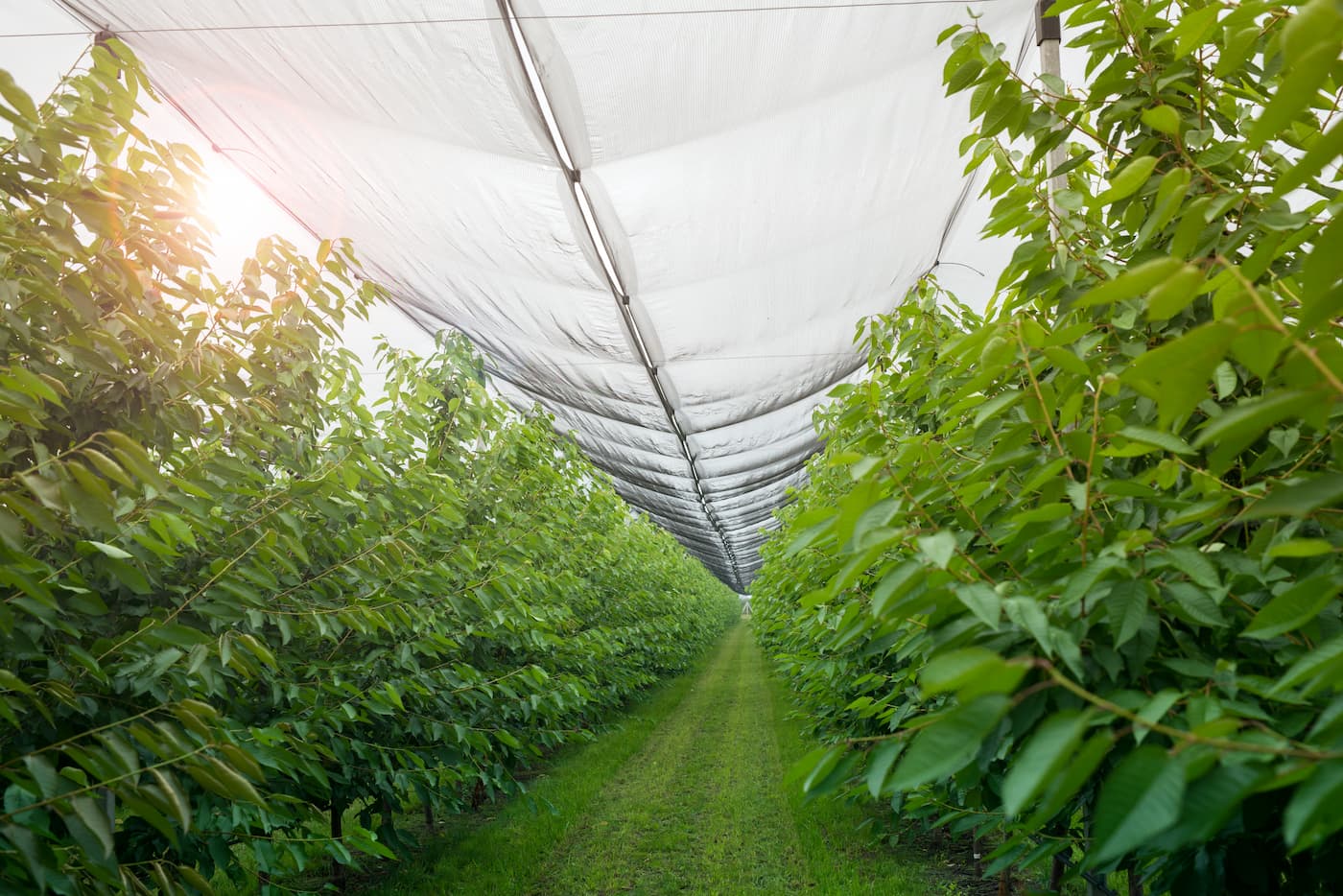
Shade covers also known as saran shade covers are an essential component of protected agriculture, though they are equally useful in residential and commercial projects. Their main function is to provide shade and protect against intense solar radiation, helping create a controlled microclimate that optimizes plant growth and improves environmental comfort. In this blog, we’ll explore the types of saran, their specific uses, and the advantages of each, highlighting how choosing the right shade cloth can make a difference in both agricultural production and outdoor shaded spaces.
What Is Saran and What Is It Made Of?
Saran is a polypropylene shade cover designed to provide solar protection and shading. Its composition, made from 100% virgin polypropylene, ensures durability, tensile strength, and stability against UV radiation, rain, wind, and chemicals. These properties make saran a reliable agricultural fabric capable of maintaining performance even under harsh environmental and chemical conditions. Thanks to its structural strength, saran shade covers regulate light, temperature, and humidity, creating favorable microclimates for crops, residential areas, or commercial spaces.
Understanding the Classification and Types of Saran
Saran is not a one-size-fits-all product. Its versatility is reflected in different classifications that allow users to select the most suitable shade net based on environmental control needs. The types of saran are generally categorized by shade percentage, color, and weave construction.
Shade Percentage
The most important criterion is the density of filtration, or shade percentage, which ranges from 20% to 90% or more:
- 20%–40%: Ideal for crops that require full sunlight but benefit from reduced light intensity or moderated temperature peaks.
- 70%–90%: Suitable for light-sensitive plants, nurseries, or seedling propagation areas, where direct exposure could be harmful.
This variability allows precise control over solar radiation and ambient temperature, ensuring optimal microclimatic conditions for each stage of plant development.
Color and Light Effect
The color of the saran influences both light quality and the perceived temperature beneath the net:
- Black: Maximizes light absorption and UV reduction, ideal for lowering ambient temperature.
- White: Reflects sunlight, distributes light evenly, and prevents “hot spots.”
- Green: Mimics natural tree canopy shade, creating a gentler light environment for crops.
- Yellow: Combines shading with insect attraction and monitoring, supporting biological control strategies
Structural Features and Dimensional Customization
Saran shade covers are woven from virgin polypropylene, giving them superior mechanical strength and durability against tension, wind, or hail. They can also be customized in length and width, facilitating installation on large structures and minimizing material waste.
This adaptability allows saran shade cover to fit the exact needs of each crop or space, optimizing coverage and shading efficiency. At the same time, their structural integrity ensures long-term performance, even under challenging weather conditions.
Specific Uses for Each Type of Saran
Agriculture and Greenhouses
Selecting the right saran shade cover is key to regulating light intensity and spectral quality throughout different stages of plant growth. This ensures more uniform development and protects sensitive seedlings during their early phases. Additional benefits include:
- Solar and Heat Stress Protection: Reduces the impact of intense radiation, preventing burns and stress in plants.
- Environmental Regulation: Controls temperature and humidity inside greenhouses, optimizing photosynthesis and crop quality.
The choice of saran depends on both the crop type and climate; for instance, arid climates benefit from high-shade, light-reflective nets that help preserve moisture.
Residential and Commercial Applications
Saran shade covers are also widely used in open spaces such as patios, terraces, and recreational areas. With different colors and shading densities, it allows users to control light intensity and temperature according to each environment’s specific needs. This creates a more pleasant and safer atmosphere for daily use, improving comfort and usability in outdoor spaces.
Examples of applications include:
- Creating comfortable shaded areas that protect against heat and UV rays.
- Installing shade structures that combine functionality and aesthetic value thanks to dimensional adaptability.
Key Advantages of Different Types of Saran
Different types of saran shade covers offer benefits that extend far beyond simple solar protection:
- Durability and Structural Resistance: Withstands tension, wind, rain, and hail.
- Climate Modulation and Water Efficiency: Reduces direct solar radiation, regulates temperature, and retains humidity, improving water-use efficiency.
- Biological Protection: Acts as a barrier against insects and pests, reducing the need for pesticides and supporting sustainable agricultural practices.
Polyproductos de Guatemala Offers a Full Range of Saran Shade Covers for Every Project
Choosing the right type of saran is key to optimizing crop performance and ensuring comfort in shaded spaces. Polyproductos de Guatemala offers a wide range of saran shade cloths with various shading percentages, colors, and constructions to meet the specific needs of agricultural, residential, or commercial projects.
Thanks to the use of virgin polypropylene, structural durability, and dimensional adaptability, their products guarantee controlled microclimates, biological protection, and water efficiency, making them a reliable and sustainable solution for every application.