


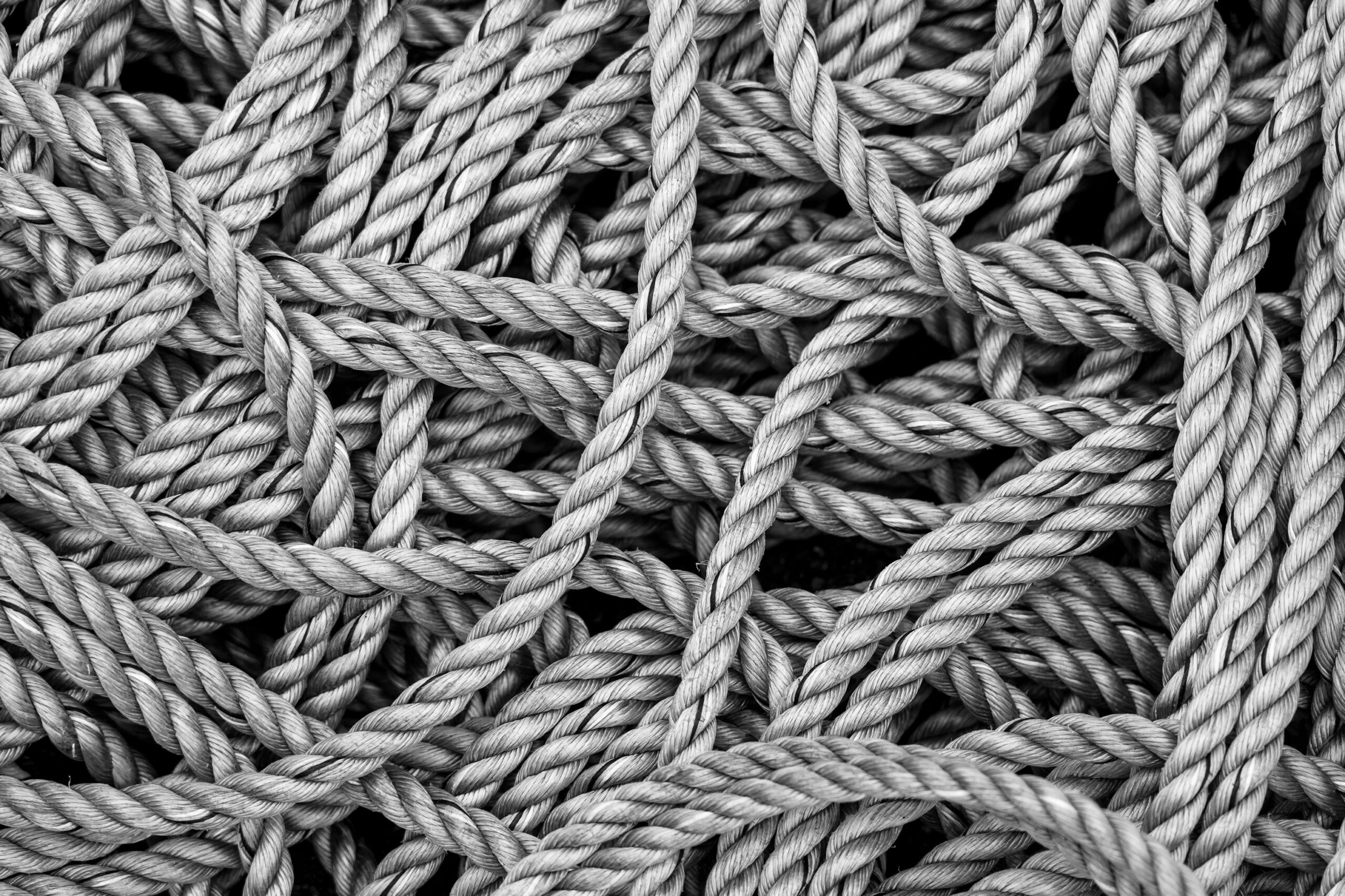
Today’s agroindustry demands increasingly reliable solutions for load handling, temporary infrastructure construction, and field logistics. For this reason, the evolution of cordage has played a key role in improving operational safety and reducing material losses. Among the most robust cordage options available today, twisted nylon rope has become an essential tool for agroindustrial operations that require high performance, durability, and control under demanding conditions.
Far from being a simple rope, twisted nylon rope is the result of advances in textile engineering developed by specialized manufacturers such as Polyproductos de Guatemala. Its adoption responds to the need for dependable securing systems in environments where heavy loads, moisture, heat, and intensive use are constant.
What Is Twisted Nylon Rope and What Makes It Different?
The term “twisted” refers to a manufacturing method in which nylon monofilaments are grouped and twisted in one direction, then combined into strands that are twisted in the opposite direction. This construction is not decorative; it allows the rope to distribute loads evenly and increases internal friction between fibers, enabling the entire structure to function as a single, high-strength unit.
Thanks to this manufacturing process, twisted nylon rope can be produced in a wide range of diameters—from thin gauges for manual tasks to large-diameter ropes capable of supporting heavy agroindustrial applications such as towing or structural securing.
Nylon Properties That Make the Difference
Nylon is a synthetic material known for its high tensile strength, controlled elasticity, and stability when exposed to temperature variations and chemical agents. These properties make it particularly well suited for agricultural environments, where loads are not always static and materials are exposed to fertilizers, moisture, and solar radiation.
One of the key characteristics of twisted nylon rope is its ability to elongate between 25% and 30% without breaking, allowing it to absorb shocks and reduce sudden jerks. This is especially valuable in towing operations, where gradual force transfer protects both machinery and anchoring points. In addition, its smooth surface facilitates handling and reduces the risk of abrasion during continuous use.
Applications and Uses of Twisted Nylon Rope in Agroindustry
The use of twisted nylon rope extends across the entire agricultural production chain. In machinery transport and towing operations, its combination of strength and elasticity allows heavy equipment to be moved more safely, particularly on uneven terrain or under adverse field conditions.
In agricultural infrastructure—such as greenhouses, macrotunnels, or wind and hail protection systems—this type of rope offers a clear advantage over metal alternatives, as it does not rust, does not transfer heat, and withstands prolonged exposure to water and chemical products used in fertigation systems.
Twisted nylon rope is also widely used in crop handling and storage applications, where firm yet gentle ties are required to support large clusters, bales, or bundles without damaging materials or losing tension over time. The availability of different diameters and colors further facilitates organization and traceability in both field and warehouse environments.
Twisted Nylon Rope Compared to Other Cordage Alternatives
When compared to polypropylene, twisted nylon rope offers higher strength per diameter, better performance under dynamic loads, and superior resistance to abrasion. While polypropylene may be suitable for temporary or low-impact applications, nylon proves more cost-effective when total lifecycle cost is considered.
Compared to natural fibers such as sisal or jute, the difference is even more pronounced. These fibers absorb moisture, degrade quickly, and can become breeding grounds for mold or rot. Nylon, on the other hand, is immune to these biological processes and maintains consistent mechanical properties, allowing for more accurate load planning and safety factor calculations.
Durability and Operational Sustainability of Twisted Nylon Rope
The long service life of twisted nylon rope helps reduce replacement frequency and, consequently, waste generation. Its resistance to UV radiation and chemical agents prevents premature degradation, even in tropical climates. In addition, these ropes can be reused at multiple stages of the production process, maximizing their value before eventual retirement.
Invest in Polyproductos’ Twisted Nylon Rope and Increase the Efficiency of Your Agroindustrial Projects
In an environment where efficiency and safety are critical, twisted nylon rope represents a strategic investment for the agroindustry. Its superior performance compared to alternative materials, versatility of use, and durability make it an indispensable tool for producers seeking long-term operational optimization.
Working with specialized suppliers such as Polyproductos de Guatemala ensures access to reliable technical specifications and solutions tailored to real-world field demands, ensuring that each application uses the right rope to operate safely, efficiently, and with confidence.