


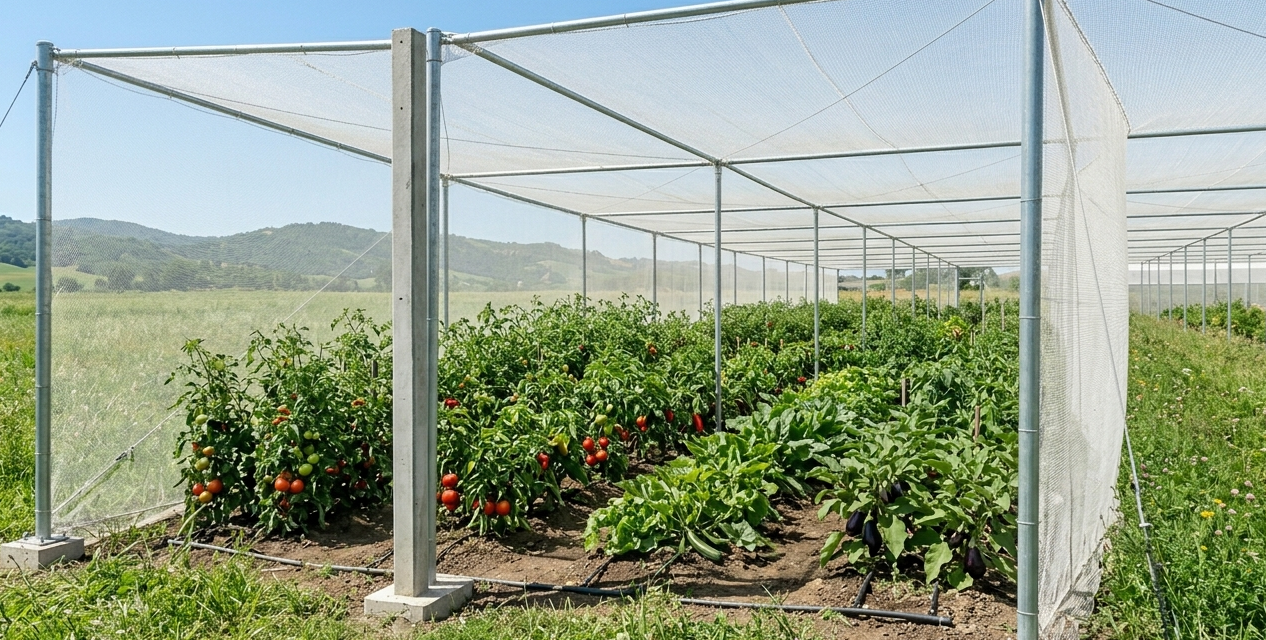
Many Guatemalan growers hesitate to install anti virus mesh because they fear that the protection they seek for their crops will create a new problem with heat buildup inside the greenhouse.
The reality is that anti virus mesh is not just a pest filter. When chosen correctly, it becomes a critical component of the greenhouse microclimate because it influences how air circulates, how temperature is regulated, and how humidity is distributed within the production area.
Below, we explain what happens to heat when you install netting and how to make the best decision for your greenhouse.
Does insect netting really raise the temperature in my greenhouse?
It depends on the type of netting you install. Not all netting will “cook” your plants; the impact on greenhouse temperature varies directly with the density of the fabric you choose.
The most common mistake isn’t installing netting at all, but installing the wrong density without adjusting your greenhouse’s ventilation.
What mesh density do I need based on the conditions in my greenhouse?
The appropriate density of insect netting depends on two main factors: the climate in your area and the type of pest you’re trying to control. Choosing the right mesh density is the key to striking a balance between protection and temperature.
There is no one-size-fits-all mesh. What works well in a greenhouse in Escuintla may not be the right choice for a nursery in Chimaltenango. Therefore, before purchasing, it’s important to understand what each density range offers:
- 25–40 mesh: This is the most recommended option for hot and humid climates, such as the lowland or coastal areas of Guatemala. It offers the best ventilation rate and minimal temperature increase. It is ideal for crops that require high air circulation.
- 50 mesh: Recommended for temperate climates or when whiteflies and aphids need to be controlled. It provides “moderate” ventilation which, when properly supplemented with side and overhead vents, keeps the temperature under control.
- 75-mesh netting: Used exclusively when there is a high infestation of thrips, a very small pest. Its low porosity significantly limits airflow, so its installation requires mechanical support such as exhaust fans or circulation fans to compensate for the airflow restriction.
| Mesh type | Mesh | Thermal increase | Recommended use |
|---|---|---|---|
| Low density | 25-40 | 0 a 0.5 °C | Warm climates |
| Medium density | 50 | 0.5 a 1.5 °C | Temperate climates with good ventilation |
| High density | 75 | 1 a 3 °C | Thrips control, requires mechanical support |
Understanding these ranges will allow you to make choices based on the actual conditions in your area and the type of crop, rather than installing just any shade cloth available on the market and risking that your greenhouse temperature will negatively impact your production.
Switching from a 25-thread mesh to a 50-thread mesh without adjusting the ventilation design is one of the most costly mistakes in managing the heat or climate of your greenhouse. Before making that change, make sure your structure has the capacity to compensate for the difference in airflow.
What are the benefits of insect netting?
High-quality anti viral mesh not only keeps insects out, but also helps maintain the greenhouse microclimate in several ways that directly affect the health and yield of your crops.
When the fabric allows for proper air circulation, the benefits extend beyond temperature:
Humidity Control
A screen with good porosity helps moisture escape the greenhouse more easily. This prevents the environment from becoming too humid and reduces the risk of fungal diseases, such as Botrytis and mildú.
Better Utilization of CO₂
When air circulates properly, CO₂ from outside can enter the greenhouse steadily. This gas is essential for plants to perform photosynthesis and grow healthily.
Crop Uniformity
Good ventilation helps distribute temperature more evenly throughout the greenhouse. This prevents some areas from becoming hotter than others, allowing plants to grow more uniformly and making it easier to achieve a more consistent harvest.
How can I reduce heat if I need to install high-density netting?
If you need a denser netting to protect your crop, you can compensate for reduced air circulation with a good ventilation system. The key is not to rely on a single solution, but to combine the type of netting with an appropriate greenhouse design. These are the most effective strategies:
Roof and side vents
Combining windows at the top and on the sides of the greenhouse is one of the most effective ways to maintain good ventilation. Cool air enters through the sides while hot air exits through the top, creating natural circulation.
For best results, it is recommended that ventilation areas account for between 30% and 35% of the cultivated area. This helps maintain a more stable temperature, even when using higher-density netting.
Support with ventilation equipment
When the crop requires very fine netting, such as 75-mesh netting, it may be necessary to supplement natural ventilation with exhaust fans or blowers. This equipment helps reduce excess heat without compromising protection against pests.
Ideally, these systems should be considered during the greenhouse design phase to avoid temperature issues and potential crop losses.
Do I need to maintain the insect screen?
Yes. Over time, dust and other debris can accumulate on the screen and block some of its openings. When this happens, air circulates with greater difficulty and the temperature inside the greenhouse can rise.
An unmaintained screen loses some of its ventilation capacity, which affects growing conditions. That is why it is important to inspect and clean it periodically to maintain good airflow and make the most of the protection it offers against pests.
| Factor | Without maintenance | With proper maintenance |
|---|---|---|
| Porosity | Decreases due to accumulated dust | Remains close to the original level |
| Interior temperature | Rises due to restricted airflow | Remains stable as designed |
| Mesh lifespan | Is significantly reduced | Extends over several production cycles |
| Pest control | Becomes less effective | Maintains its function as a physical barrier |
How often should I clean the mesh?
In arid areas or areas with high dust levels, it is recommended to wash the mesh with a pressure washer at least once a month. This simple practice restores the mesh’s natural ventilation capacity and extends the material’s lifespan for several growing cycles.
In addition to cleaning, it is important to keep the mesh properly tensioned. A loose mesh reduces the open pore area and creates zones of reduced ventilation that concentrate heat unevenly inside the greenhouse.
How to Choose an Insect Screen Without Affecting Greenhouse Temperature?
Fear of heat shouldn’t be a reason to forego the protection that an insect screen can provide for your greenhouse. In the vast majority of cases, the problem isn’t the screen itself, but rather choosing a density that’s unsuitable for the climate and the structure where it will be installed.
If your greenhouse is in a warm area of Guatemala, a low-density net with good side ventilation can provide effective protection against pests without causing a significant rise in temperature. If thrips are the problem and you need a higher density, your structure’s ventilation design will be the key factor in maintaining the right balance.
The key is to make an informed decision based on sufficient technical information before installation. If you want to learn about the options available for your type of crop and your region, visit Polyproductos Guatemala and discover solutions designed for the Guatemalan agricultural sector.
Frequently Asked Questions About Insect Netting and Greenhouse Heat
Does any insect screen raise the temperature in the greenhouse?
Not necessarily. Low-density screens (25–40 mesh) cause a minimal or nearly imperceptible temperature increase. A significant temperature rise occurs mainly with high-density screens when they are not complemented by an adequate ventilation design.
Can I install insect netting without modifying my greenhouse’s ventilation?
It depends on the type of netting and your structure’s current ventilation conditions. If your greenhouse already has a good ratio of growing area to ventilation openings, medium-density netting can be installed without major modifications. For finer netting, it’s best to review the ventilation design first.
Does insect netting reduce the amount of light my plants receive?
In most cases, the reduction in light is minimal, since the primary function of insect netting is to keep pests out, not to create shade. If your crop also requires control of solar radiation, we recommend supplementing the installation with appropriate shade netting. At Polyproductos Guatemala, you can find different options depending on your crop’s needs and the conditions in your region.
How long does a well-maintained insect screen last?
With regular cleaning and proper tension, a high-quality screen can last for several growing seasons. The factor that most significantly reduces its lifespan is the accumulation of dust in the mesh, which also impairs its ventilation capacity.