


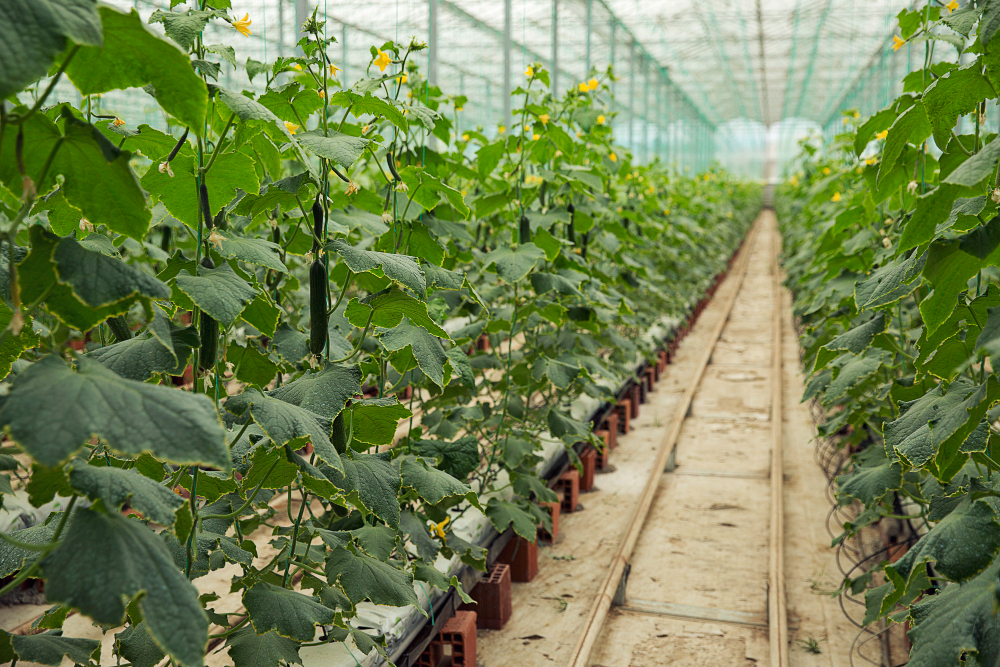
The Challenge of Humidity in Greenhouses During the Rainy Season
If you have greenhouses or macro-tunnels, you know that September and October are the most critical months. Constant rainfall keeps relative humidity above 85–95%, and the temperature difference between day and night causes intense condensation inside the structures.
This condensation creates the perfect environment for devastating fungi such as botrytis (Botrytis cinerea), downy mildew (Peronospora spp.), and powdery mildew (Erysiphe spp.). These pathogens can destroy up to 40–60% of your crop—such as tomatoes, bell peppers, cucumbers, or sweet peppers—in a matter of weeks if left unchecked.
Many growers focus on ventilation, fungicides, and irrigation control, but they overlook a critical factor: the agricultural twine they use to stake their plants. Low-quality twine that absorbs moisture becomes a source of infection that spreads fungi throughout the greenhouse.
The Problem: Organic Ropes That Retain Water and Promote Mold Growth
Why Organic Fibers Pose a Risk During the Rainy Season
| Characteristic | Organic Twine (jute, cotton) | Synthetic Twine (polypropylene) |
| Water Absorption | Absorbs 20–30% of its weight in water | Does not absorb water (hydrophobic) |
| Drying Time | 24–48 hours to dry completely | Dries immediately (does not retain water) |
| Fungal Growth | High: damp material is a breeding ground for botrytis and downy mildew | None: dry material does not promote fungal growth |
| Shelf Life in Greenhouse | 2–4 weeks before rotting | 6–8 months (full cycle) |
| Strength when wet | Loses 40–50% of its strength | Retains 100% of its strength |
| Replacement cost | High (requires replacement every 2–4 weeks) | Low (single use per cycle) |
The Solution: Synthetic Polypropylene Agricultural Twine
Advantages of Polypropylene Twine in Greenhouses
The 100% virgin polypropylene agricultural twine manufactured by Polyproductos de Guatemala solves the problem of moisture and mold at its root:
- Does not absorb moisture
- Does not promote mold growth
- Smooth surface that does not damage plants
- Lifespan of 6–8 months
How Proper Guidance Using Polypropylene Agricultural Twine Improves Air Circulation
The Principle of Air Circulation in Greenhouses
In greenhouses and macro-tunnels, hot, dry air tends to rise, while cool, humid air accumulates at the bottom. If plants are too densely packed or improperly trained, “pockets” of stagnant air form where moisture accumulates and fungi thrive.
Comparison: Organic twine vs. synthetic twine in a greenhouse
In greenhouses and macro-tunnels during the rainy season, the agricultural twine you use is no small matter. It’s your first line of defense against fungi such as botrytis and downy mildew. Organic twine that absorbs moisture becomes a source of infection. Synthetic polypropylene twine that doesn’t absorb water breaks the infection cycle from the start.
By using Polyproductos’ polypropylene twine and combining it with proper training techniques that maximize air circulation, you can:
- Reduce the incidence of fungal diseases transmitted by damp vines by 70–80%
- Reduce fungicide applications by 50%, saving $1,200–1,400 USD per hectare
- Increase production by 25–30% by protecting plants from disease
The investment in polypropylene twine is minimal per hectare, but the return on investment is significant.
Polyproductos de Guatemala is ready to be your partner this rainy season. Our agricultural polypropylene twine, manufactured specifically for greenhouses and protected agriculture, offers you the protection, durability, and competitive price you need to grow fungus-free crops.
Frequently Asked Questions (FAQ)
Is polypropylene twine safe for direct contact with plants?
Yes. Polyproductos’ 100% virgin polypropylene twine is inert and non-toxic. It does not release chemicals that harm plants and is safe for direct contact with stems, leaves, and fruit.
Do I need to replace the twine during the growing cycle?
No. The polypropylene twine is designed to last the entire growing cycle (6–8 months for tomatoes, 5–6 months for peppers). It only requires weekly tension adjustments as the plant grows.
Does the polypropylene twine withstand UV radiation inside the greenhouse?
Yes. Polyproductos twine contains UV-stabilizing additives that guarantee a 6–8-month lifespan even under intense radiation in plastic or glass greenhouses.
Can I use the same twine for multiple growing cycles?
Partially. If the twine is in good condition (no breaks, no visible degradation), it can be reused for one additional cycle. However, for high-value greenhouse crops, we recommend using new twine to ensure maximum strength and avoid contamination risks.