


August through October: The Most Critical Season for End-of-Year Vegetables
If you grow tomatoes, bell peppers, sweet peppers, cucumbers, squash, or any other vegetable for the end-of-year harvest in Guatemala, you know that the period between August and October determines the success or failure of your investment. These weeks mark the transition from the intense rainy season to the start of the dry season, when the soil is completely saturated with water and your plants’ roots face their greatest challenge.
Soil waterlogging during these months is the roots’ greatest enemy. Excess moisture creates perfect conditions for pathogenic fungi such as Phytophthora, Pythium, and Fusarium, which attack the root system, causing root rot, yellowing leaves, and premature plant death. At the same time, torrential rains leach nutrients from the soil—especially nitrogen, potassium, and essential micronutrients—leaving plants weakened just when they need maximum energy to produce high-quality fruit.
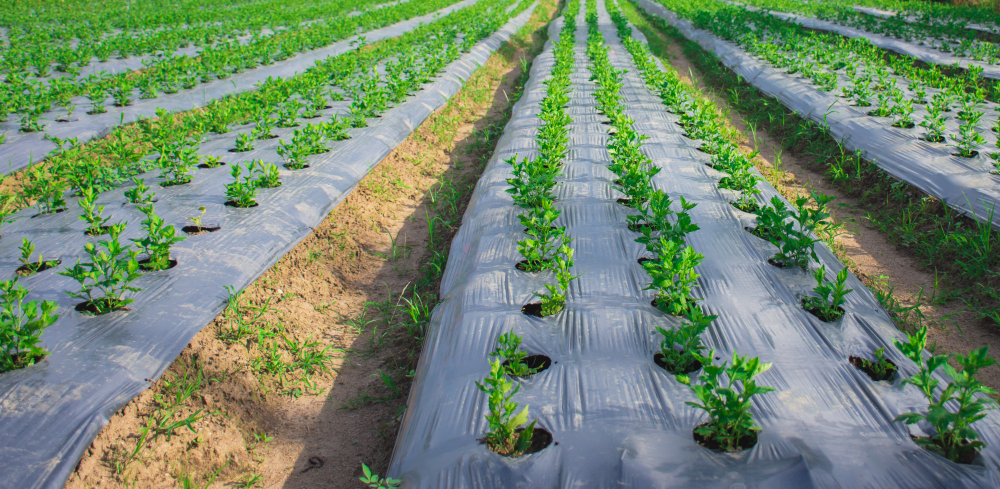
Farmers in the Northern Triangle face 30–50% losses in their vegetable crops during this period if they do not implement appropriate measures. However, there is a proven and economically viable solution: the use of polypropylene mulch. This physical barrier protects against erosion, prevents mud splatter that carries bacteria to the leaves, and keeps fertilizers close to the roots to ensure a clean and bountiful harvest in October and November.
The Problem: Waterlogging and Its Devastating Consequences
The Climate Context from August to October
Between August and October, Guatemala experiences its second peak of rainfall during the rainy season. According to data from INSIVUMEH, this period sees:
| Regions of Guatemala | Average Rainfall, August–October | Days with Heavy Rain |
| Southern Coast (Escuintla, Suchitepéquez) | 800-1,200 mm | 45–60 days |
| Central Highlands (Quetzaltenango, Totonicapán) | 600-900 mm | 40-55 days |
| Northern Lowlands (Petén, Izabal) | 1,000-1,400 mm | 50-70 days |
| Ermita Valley (Guatemala, Sacatepéquez) | 500-700 mm | 35-50 days |
These rains keep the soil saturated with moisture for weeks on end, creating anaerobic (oxygen-deprived) conditions that suffocate the roots and activate soil-borne pathogens.
Consequences of waterlogging in vegetables
| Problem | Cause | Consequence for the crop |
| Root rot | Phytophthora, Pythium, and Fusarium fungi activated by moisture | Plants die within 7–14 days; total loss of investment |
| Nutrient leaching | Water carries nitrogen, potassium, and calcium to deeper layers | Weak plants, small fruits, 40–50% lower yield |
| Mud splatter | Raindrops strike bare soil and splash onto leaves | Bacteria and fungi reach leaves and fruits, causing leaf diseases |
| Soil erosion | Water washes away the fertile topsoil | Loss of 2–5 cm of soil per season, long-term reduction in fertility |
| Soil compaction | The weight of water compresses soil particles | Roots cannot penetrate; shallow and weak root system |
| Foliar diseases | Relative humidity >90% for consecutive days | Downy mildew, late blight, anthracnose; 25–35% loss in production |
The Solution: Polypropylene Ground Cover
What is ground cover and how does it work?
Ground cover (also called agricultural fabric, mulch, or polypropylene cover) is a sheet of synthetic material that is placed on the soil surface, around plants, creating a physical barrier between the soil and the outside environment. Its primary function is to protect the soil from the destructive effects of heavy rain while maintaining optimal conditions for root development.
Why is polypropylene the ideal material for ground cover?
Not just any material works as ground cover. Woven polypropylene ground cover offers technical advantages that make it superior to traditional alternatives such as straw, sawdust, conventional black plastic, or bare soil.
| Characteristic | Polypropylene Cover (Polyproductos) | Straw/Sawdust | Conventional Black Plastic |
| Water Permeability | Allows controlled infiltration (prevents waterlogging) | Allows infiltration but decomposes | Waterproof (causes waterlogging) |
| UV Resistance | UV-stabilized (8–12-month service life) | Decomposes in 2–3 months | Degrades in 4–6 months |
| Mechanical Strength | 80–120 kg breaking strength | Low; disperses with wind/rain | 40–60 kg; breaks easily |
| Weed Control | Blocks 95–98% of light, inhibits germination | Blocks 60–70%, weeds penetrate | Blocks 90–95% |
| Durability | 8–12 months (reusable for 2–3 cycles) | 2–3 months (single use) | 4–6 months (single use) |
| Cost per m² | $0.15-0.20 USD | $0.08-0.12 USD | $0.12-0.18 USD |
| Maintenance | Minimal, no replacement required | High, requires constant replacement | Moderate, requires repair of tears |
| Availability in Guatemala | Locally manufactured, immediate delivery | Varies by season | Imported, with waiting times |
Technical advantages of Polyproductos’ polypropylene cover:
Polyproductos’ polypropylene cover offers controlled permeability that allows water to seep through while preventing waterlogging and protecting against direct impact from raindrops. It is UV-stabilized with special additives that protect against solar degradation, maintaining its integrity for 8–12 months. It has a mechanical strength of 80–120 kg of breaking force, sufficient to withstand strong winds and handling during installation. It provides weed control by blocking 95–98% of light, inhibiting the germination of weed seeds. It is durable and reusable for 2–3 growing cycles, reducing the cost per cycle. It is manufactured locally in Guatemala, where Polyproductos understands the climatic needs of the Northern Triangle.
How the Ground Cover Protects Your Crop Between August and October
- Prevents soil erosion caused by heavy rain
- Prevents mud splatter that carries bacteria onto the leaves
- Keeps fertilizers close to the roots
- Protects the roots from pathogenic fungi
- Keeps soil temperature more stable
Proper Installation of the Floor Covering
- Soil Preparation (Before Installing the Cover)
- Installing the Cover
- Maintenance During the Growing Season
Waterlogging between August and October doesn’t have to mean devastating losses for your end-of-year vegetable crop. With our polypropylene ground cover, you can protect your plants from erosion, mud splashes, nutrient leaching, and pathogenic fungi, ensuring a clean, bountiful, and profitable harvest in October and November.
Polyproductos de Guatemala is ready to be your partner during this critical season. Our polypropylene ground cover, manufactured locally with a deep understanding of the Northern Triangle’s climate, offers you the protection, durability, and competitive price you need to ensure the success of your end-of-year harvest.
Don’t wait for the first heavy rains of August to arrive. Install your ground cover today—with Polyproductos’ polypropylene ground cover—and protect your investment for a successful harvest in October and November.
Frequently Asked Questions (FAQ)
When should I install the ground cover?
The best time is immediately after preparing the soil and before transplanting, ideally 2–3 weeks before the start of the heavy rains in August. Installing it early maximizes protection throughout the critical period.
Can I reuse the cover in the next growing cycle?
Yes, Polyproductos’ polypropylene cover is designed to last for 2–3 growing cycles if kept in good condition. Clean the material at the end of the cycle, roll it up, and store it in a dry, dark place. Inspect it before reusing and repair any small tears with specialized tape.
Does the mulch affect rainwater infiltration?
No, on the contrary. The polypropylene mulch has controlled permeability that allows for slow and uniform water infiltration, preventing waterlogging. Water penetrates through the material’s pores or flows laterally in a controlled manner toward the roots.
Do I need drip irrigation with a mulch cover?
It is not mandatory, but it is highly recommended. Drip irrigation under the mulch cover maximizes water and fertilizer efficiency by delivering them directly to the root zone without losses due to evaporation or leaching. The combination of mulch cover and drip irrigation offers the best return on investment.
Does the mulch control all weeds?
The mulch blocks 95–98% of the light, inhibiting the germination of most weeds. However, some weeds may grow through the holes in the mulch. Remove these weeds manually or with a selective herbicide applied carefully around the plant.