


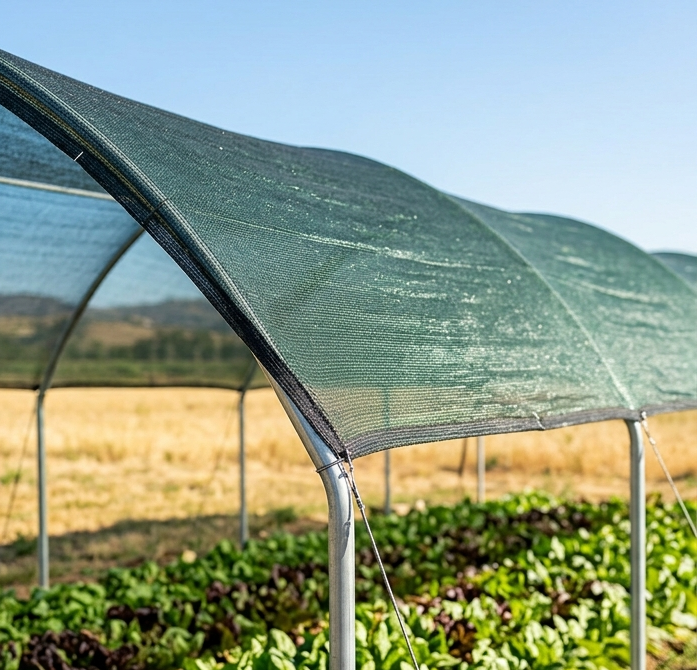
If you’re a farmer in Guatemala, you know that strong sunlight can help your crops but also damage them. Shade cloth, or “sarán,” allows you to control light and temperature to create a more suitable environment for your plants. In this guide, you’ll learn how to choose the right density or percentage and color to protect your crops.
Does the color of the shade cloth affect how your crops grow?
Yes, the color of the shade cloth directly affects the growth of your crops, as it changes the way sunlight reaches the plants. Each color alters the light they receive, which can affect photosynthesis, leaf temperature, and even the presence of pests in your crop or greenhouse.
What color of shade cloth should I use for my crops?
- Black: Blocks more light and UV rays, helping to reduce the sun’s intensity during the day. It can also retain some heat at night, making it useful in temperate or cold climates. It is ideal for crops like tomatoes, chili peppers, and cucumbers, which need warmth but also protection from excessive sun in the summer.
- White: Reflects sunlight and distributes it evenly, preventing very hot spots. It helps lower the temperature and is ideal for crops that need good light without direct sun, such as ornamental plants, lettuce, and heat-sensitive crops.
- Green: It mimics the shade of trees and is used in gardens and urban spaces that need moderate protection.
- Yellow: In addition to providing shade, it helps attract and detect pests, making it easier to control them without using as many chemicals.
Can using shade cloth help save water when watering?
Yes, using polypropylene shade cloth helps the soil retain moisture longer. By reducing the temperature and the intensity of the sun, water takes longer to evaporate. This translates to more efficient use of water and lower production costs.
Benefits you’ll notice on your plot or in your greenhouse
- You’ll need to water less frequently during the week.
- You’ll get more out of your fertilizers, since the soil stays moist longer.
- Your crops will be more resilient during periods of drought or intense heat.
What shade cloth percentage should you use for your crop?
The shade percentage depends on how much light your crop needs and how intense the sun is in your area. Don’t choose shade cloth based solely on price or availability; a poor choice can affect your plants’ growth. Here are the most recommended ranges for warm climates like those in Guatemala.
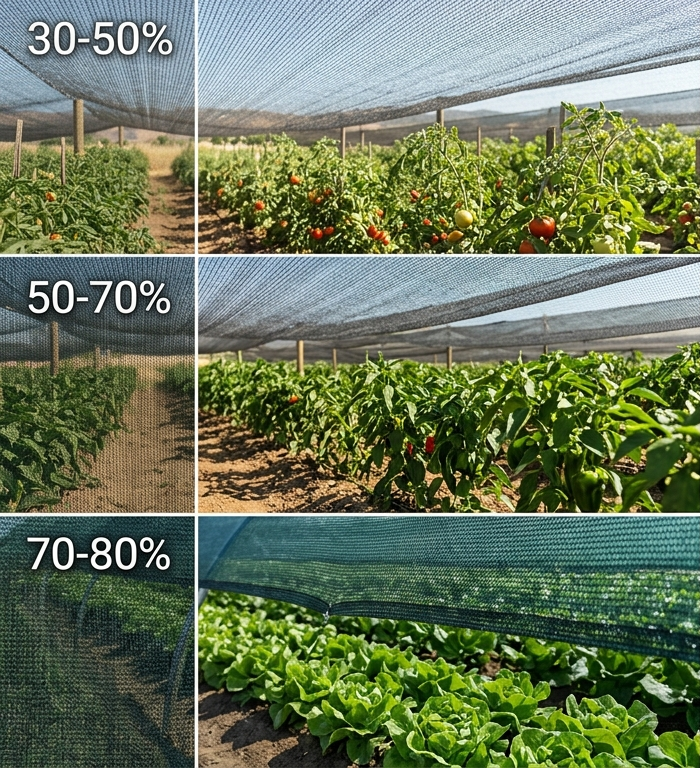
30% to 50% Shade Net (Light Shade)
This range is ideal for crops that require ample light to develop properly. This shade net is a good choice when you want to protect fruit quality without sacrificing productivity, especially during periods of intense heat.
Recommended crops: tomatoes, corn, and coffee.
Main benefit: protects against excessive sun while maintaining crop growth.
50% to 70% shade cloth (medium shade)
This percentage works best for crops that are more sensitive to heat and direct radiation. It helps reduce temperature, decreases water loss through transpiration, and prevents problems such as premature flowering (bolting), which often occurs under heat stress conditions.
Recommended crops: vegetables, herbs, and flowers that require moderate protection
Main benefit: reduces heat stress and improves water retention in the crop
70%–80% Shade Cloth (High Shade)
This range is designed for more delicate stages, such as seedling propagation or the care of plants that cannot tolerate direct sunlight. It creates an environment with diffused light and a more stable temperature, which promotes rooting and early development.
Recommended crops: shade-loving plants and ornamental plants that require intense shade and temperature control.
Main benefit: creates a protected environment that supports the development of sensitive plants.
90% to 95% shade cloth (heavy shade)
This type of shade cloth is not intended for agricultural production. Its function is to block sunlight almost completely, so it is used primarily to provide shade in spaces such as rest areas, parking lots, or warehouses.
Application: rest areas, parking lots, vehicle protection, and open warehouses.
Main benefit: provides almost total shade for industrial or residential, non-agricultural uses.
| % Shade | Recommended crops | Main benefit |
|---|---|---|
| 30% – 50% | Tomatoes, corn, and coffee | Prevents fruit sunscald and reduces heat stress |
| 50% – 70% | Vegetables, herbs, and flowers requiring moderate protection | Temperature control and reduced transpiration |
| 70% – 80% | Shade plants and ornamental plants requiring intense shade and thermal control | Protection for sensitive species and diffused light |
| 90% – 95% | Rest areas, parking lots, warehouses | Full shade, industrial or residential use |
How do you choose the right shade cloth if you grow multiple types of crops?
To choose the right shade cloth, you should consider three key factors: color, shade percentage, and local conditions. When you grow multiple crops or the climate varies significantly, making a decision without expert advice can negatively impact your results.
In these cases, it is best to consult with experts such as Specialty Textile Industries, manufacturers of 100% virgin polypropylene shade cloth, to choose the one that truly works for your project and thus avoid losses due to a poor choice.
Everything You Need to Know About Using Shade Cloth in Your Crops
Does shade cloth affect your plants’ growth?
No, if you choose the right shade percentage. Problems arise when you use too much shade on crops that need plenty of light, such as tomatoes or chili peppers. With the right shade cloth, your plants can grow better and produce higher-quality crops.
What shade net percentage should you use if you’re growing in a very hot area?
When working in areas with high temperatures and intense radiation, it’s advisable to increase the shade percentage compared to what you’d use under normal conditions. This helps protect your crops from excessive sun and reduce heat stress. Adjusting the shade level according to your climate can make all the difference in the stability and yield of your production.
Is it better to install the shade cloth on the inside or outside of the structure?
In most cases, it is better to install the shade cloth on the outside of the structure. This way, it blocks solar radiation before it enters and heats up the interior. This helps maintain more stable temperatures inside the greenhouse or protected area, creating a more suitable environment for crop growth.
How does shade netting help control pests in your crop?
In addition to regulating the amount of light, shade netting also acts as a physical barrier that makes it difficult for insects and birds to enter. This reduces pest pressure within the crop and can decrease the need to apply pesticides. As a result, it not only lowers costs but also improves the quality and safety of your produce