


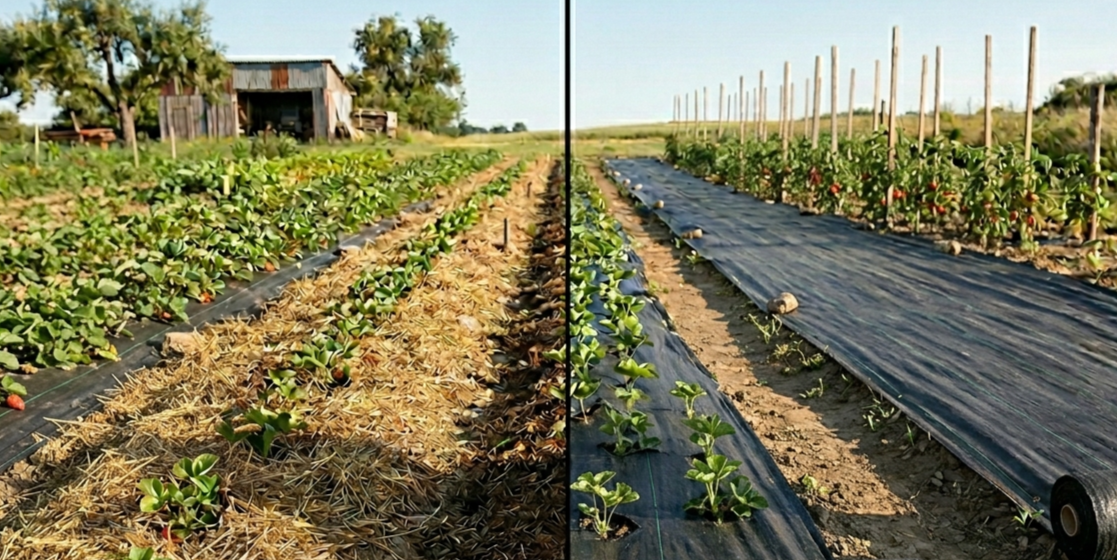
Weed control is one of the most time- and resource-intensive tasks in any agricultural operation, and this is where the big question arises: Should I continue using traditional mulch, or is it better to invest in a ground cover?
Although both materials are designed to protect the soil, the technical differences between plastic mulch and woven geotextile can determine the profitability of your crop for several years. In this guide, you’ll find the three key factors to consider when making that decision.
How does mulch differ from ground cover fabric?
The main difference lies in the material’s structure: mulch covers the ground with a layer that can be organic or plastic, while ground cover fabric is a woven textile that protects the soil without sealing it. This completely changes how water, air, and temperature behave around your plants’ roots.
What is mulch?
Mulch is a layer of organic material such as straw, bark, or wood chips, or inorganic material including plastic, stones, rubber, or sand, that is placed on the ground to retain moisture, regulate temperature, and block light that promotes weed germination.
Plastic mulch is inexpensive and easy to install, but it has significant limitations in terms of breathability and heat management. In most cases, it must be replaced at the end of each growing season, which entails recurring costs for materials, labor, and waste disposal.
What is Ground Cover fabric?
Ground Cover fabric is a textile made from high-density polypropylene strips. Unlike plain plastic, its permeable structure allows water and air to pass through to the soil while blocking the solar radiation that causes weeds to germinate.
This combination of properties makes it a more versatile and durable solution for growers looking to reduce operating costs and maintain more stable soil conditions over multiple growing seasons.
There are three factors that can guide your decision on which of these two materials to use for crop care: durability, moisture management, and weed control without the use of agrochemicals. Below, we’ll break down each factor in detail.
How long does mulch last compared to Ground Cover? (Factor 1)
Plastic mulch is designed to last only one season. Polyproductos de Guatemala’s Ground Cover, with its UV-protective additives, lasts more than 7 years when exposed to direct sunlight. That difference determines which of the two is more cost-effective in the medium term.
- Organic or plastic mulch: Organic materials decompose and must be replaced frequently. In the case of agricultural plastic, this entails recurring costs for materials, labor, and waste disposal at the end of each growing cycle.
- Ground Cover: A single installation can last through multiple growing cycles without needing replacement, even in the hottest regions of the country.
Which material traps the most moisture and can affect the health of your plants? (Factor 2)
Because it is impermeable, plastic mulch can cause waterlogging, heat buildup in the topsoil, and a lack of oxygen at the roots of your plants. In the case of Ground Cover geotextile, because it is permeable, it allows water and air to pass through in a controlled manner, which promotes a more stable microclimate and reduces water stress.
Why does soil permeability matter so much in crops?
In regions with heavy rainfall or drip irrigation, an impermeable material can turn the soil into a water trap. Water accumulation under the plastic limits root oxygenation and increases the risk of anoxia, one of the main causes of plant loss in established crops.
Ground Cover distributes irrigation water evenly into the soil, without waterlogging or dry spots. This results in healthier roots and greater water use efficiency.
How does Ground Cover protect against fungi and soil-borne diseases?
By acting as a clean physical barrier, Ground Cover prevents fruit from coming into direct contact with damp soil. Such contact is one of the main sources of fungi and rot that affect the product’s market quality.
Unlike decomposing organic mulch, which can become a breeding ground for pathogens and pests, the surface of Ground Cover remains dry and clean, drastically reducing these risks without the need for additional treatments.
Which is more effective at controlling weeds: ground cover or mulch? (Factor 3)
Ground Cover, because the mesh physically blocks sunlight from reaching the soil, preventing weeds from germinating without the need for herbicides. Organic mulch also reduces light penetration, but it decomposes, gets blown away by the wind or washed away by heavy rain, and requires constant replenishment to maintain its effectiveness.
- Physical effectiveness. Ground Cover’s dense fabric blocks light before any seeds can germinate and does not lose effectiveness over time. As organic mulch decomposes, it leaves gaps through which light eventually filters, forcing the grower to replenish it or resort to herbicides.
- Operational savings. With Ground Cover, the need for manual weeding and the purchase of chemicals are reduced. With mulch, the expense of materials, replacement labor, and supplemental herbicides is repeated every season without solving the underlying problem.
- Stability and cleanliness. The Ground Cover mesh is secured with staples and stays in place regardless of rain or wind, which is critical in the growing regions of the Guatemalan highlands. Straw or bark mulch, on the other hand, shifts easily under those same conditions, leaving the soil exposed just when it needs protection the most.
Comparison Chart: Mulch vs. Ground Cover
Here is a quick overview of the key differences between plastic mulch and Ground Cover netting so you can compare them based on the actual needs of your crop:
| Factor | Plastic mulch | Ground Cover mesh |
| Durability | 1 season (plastic) or frequent replacement (organic) | Up to 7 years with UV protection in the case of Polyproductos de Guatemala |
| Permeability | Impermeable. May cause waterlogging and excessive heat | Permeable. Allows water, air, and liquid fertilizers to pass through |
| Weed control | Parcial. Puede desplazarse con el viento o la lluvia | Blocks sunlight and physically prevents weed germination |
| Crop Health | Decaying organic matter can harbor fungi and pests | A clean physical barrier that prevents fruit from coming into contact with the ground |
| Long-Term Cost | Low initially, but with frequent replacement and recurring losses | Higher initial investment, but lower operating costs and greater profitability |
So which material should you choose: Ground Cover or mulch?
It depends on the type of crop you’re growing and how long you plan to work that land. If you’re looking for a one-season solution for a short-cycle crop, mulch can work. But if your production will last more than one season or you’re looking to reduce your spending on labor and agrochemicals, Ground Cover is the best choice in almost every scenario.
When does using mulch work?
Mulch makes sense in very specific contexts. In home gardens or small ornamental plots where the goal is to retain moisture and improve the soil’s appearance, organic bark or straw mulch does the job well without requiring a major investment. It can also be useful in very short-cycle, single-season crops where the grower does not plan to reuse the area in the same way the following year.
In those cases, the installation cost and lifespan of the plastic or organic material align with the production timeline.
Why is Ground Cover the best option for protecting your crops?
Because it solves the three problems that cost you the most time and money as a grower: weeds, moisture, and soil degradation—and it does so for several years without needing to be replaced.
Organic and plastic mulch must be replaced every season, creating a recurring cost that adds up year after year, whereas Ground Cover, installed just once, physically blocks weed germination, allows water and air to reach the roots, and maintains a stable microclimate in the soil—resulting in fewer weeding days, fewer herbicide applications, and healthier roots.
If you want to learn more about the options available for your crop, visit Polyproductos de Guatemala and find the right mesh for the actual conditions of your land.
Frequently Asked Questions About Mulch and Ground Cover
Does Ground Cover replace mulch for all crops?
Not in all cases. For crops with very short growing cycles or ornamental gardening, organic mulch may be sufficient. However, in medium- and long-term production systems, Ground Cover offers a better return on investment thanks to its durability and the fact that it does not require frequent replacement.
How long does a Ground Cover mat last?
Polyproductos Guatemala’s Ground Cover mat lasts up to 7 years when exposed to sunlight. Its lifespan depends on the intensity of solar radiation in your area, foot traffic on the mat, and regular maintenance.
Is Ground Cover compatible with drip irrigation?
Yes. As a permeable material, Ground Cover allows water and liquid fertilizers to reach the soil directly without obstruction. It is fully compatible with drip and micro-sprinkler irrigation systems.
Can I use Ground Cover both in open fields and in greenhouses?
Yes. It is designed to work in both environments. In open fields, it protects against weeds, rain, and trampling. In greenhouses and nurseries, it keeps aisles clean, dry, and tidy, which reduces the daily workload and improves the appearance of the operation.
Is black plastic mulch better than Ground Cover for controlling soil temperature?
It depends on the climate in your area. Black plastic absorbs heat and raises soil temperature, which can be helpful in cold areas at the start of the growing season. But in warm regions or during dry seasons, that same effect can harm the roots. Ground Cover creates a more balanced microclimate because it allows for natural soil transpiration, without the temperature extremes associated with impermeable plastic.